Helicopter skiing Canada can be an activity fraught with risk, but at Pure Powder, we do everything we can to mitigate that. We only connect our clients with operators and accommodations that uphold the highest standards of safety, who will be sure to look out for you at every turn.
By booking through Pure Powder, you’re booking with experienced experts well-versed on all things to do with helicopter skiing Canada, including the importance of safety procedures. In this article, we’ll run through safety procedures and offer up a few tips and tricks you can employ to help keep things as smooth as possible throughout your adventure.
Helicopter Skiing Canada: The Undeniable Risks Of Helicopter Skiing
Helicopter skiing is a thrill and an adventure, taking you to the precipice of some of the most exciting places in the world. You’ll soar down slopes, snow shooting away beneath your feet as you navigate your descent between changing terrain and natural obstacles like boulders, ravines and trees. It’s an experience that’s unforgettable, exclusive, sought-after and yes, possibly dangerous too. It’s something most experienced skiers are well aware of, and few approach the idea of high-altitude backcountry skiing with only levity.
Falls, collisions, fatigue, hypothermia and avalanches are but a few of the potential risks that follow helicopter skiers. Their threat is multiplied by the inaccessibility of the terrain in which the sport takes place, with medical rescue being all but impossible unless carried out via a helicopter mission. This shouldn’t stop you from enjoying the sport by any means, but these risks should be kept in mind by anyone doing off-piste skiing.
At the very least, by understanding these risks, you’ll have context as to why there are such rigorous safety measures in place during helicopter skiing, and remind you to adhere to them at all times.
Pure Powder’s Quality Control
The first and foremost protection against any risks that a Pure Powder client benefits from is our own discretion. Over our many years of experience in the helicopter skiing industry, and in particular, helicopter skiing Canada, we’ve developed a worldwide network of partnerships with not only providers, but also accommodations and equipment suppliers. We’ve selected the best of the best; each of our partner institutions delivers quality in every aspect. Perhaps most of all, the trait we look for in a potential partner is safety.
We would never set any of our clients up with an institution that does not uphold the utmost safety standards at all times, whether they are taking you out on a helicopter skiing experience in Canada, providing you with lodgings, or kitting you out with your ski equipment. Book with us and enjoy this peace of mind, as well as concierge-level care through the entire duration of your trip. Our goal is to handle all the logistics and drudgery on behalf of our clients, letting them take care of the adventuring and luxuriating components of the holiday.
Helicopter Skiing Canada: Know Your Limits
‘Know thyself’ proclaims the famous aphorism found carved into the walls of the Temple of Apollo at Delphi, where prophets dwelled and attracted visitors from all over the land who sought their wisdom. Fortunately, titbits like our example were vague and catchy enough to apply to just about any scenario– helicopter skiing included! In this context, we urge you to reflect on your own skiing abilities before you embark on a specific trip.
Canada’s skiable area is vast and diverse, with terrain types suited to skiers of every level. If you’re a beginner, it would be better to stick to gentle slopes and open glades, where you can ski comfortably and work on your off-piste skills. Once you’re more experienced, you can begin experimenting with steeper gradients, tree skiing and more rugged terrain. Injuries and disasters are far more likely to happen when skiers try to take on ski runs beyond their current skill level.
If in relation to skill, you’re worried about being mismatched with the rest of your group, there are solutions available. Booking a small or private group helicopter skiing Canada experience is the best way to avoid an asymmetrical group. The former reduces the chances significantly, but the latter gives you the outright freedom to choose exactly who joins you on the trip. That way, you and your chosen posse can ski the day away at exactly the pace and challenge level you decide to set.
Listen To Your Guide
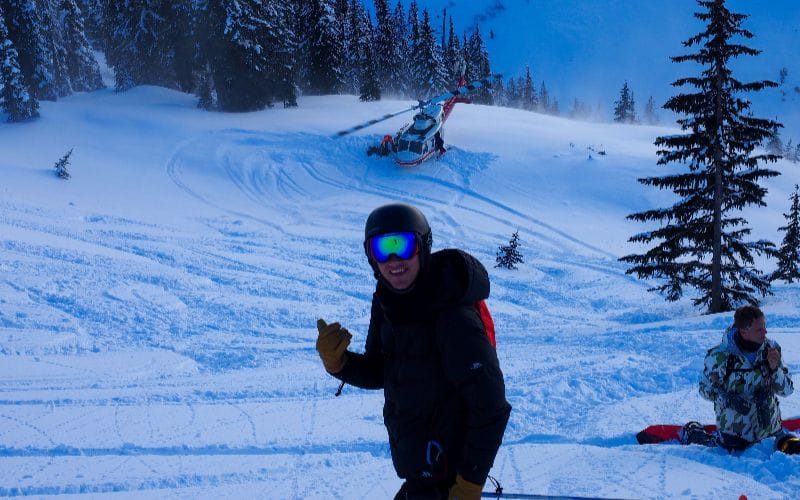
During the experience of heli skiing itself, your guides are truly an invaluable asset when it comes to avoiding danger and maximising fun. Every one of them is expertly trained and deeply experienced in whichever terrain they’re operating. Every helicopter will carry multiple guides, with each group of about 3-4 receiving their own. This allows them to give you their full attention and provide the best service. Their job is to keep an eye on guests and the environment at all times, simultaneously.
Skiers will be monitored for signs of fatigue, injury or accident, while keeping a lookout for any signs of changing weather, hidden obstacles or possible avalanches. In either instance, the goal of the guide is to intervene before the situation escalates, even calling the ski trip short if need be. This might be disappointing, but also lifesaving. Always heed their advice and respond to their instructions swiftly.
Keep in mind, this would only be a worst-case scenario. During the average trip, the guides are there to help you make the most of the experience. They’ll highlight not only the safest, but also the most enjoyable routes.
Get Ski Fit
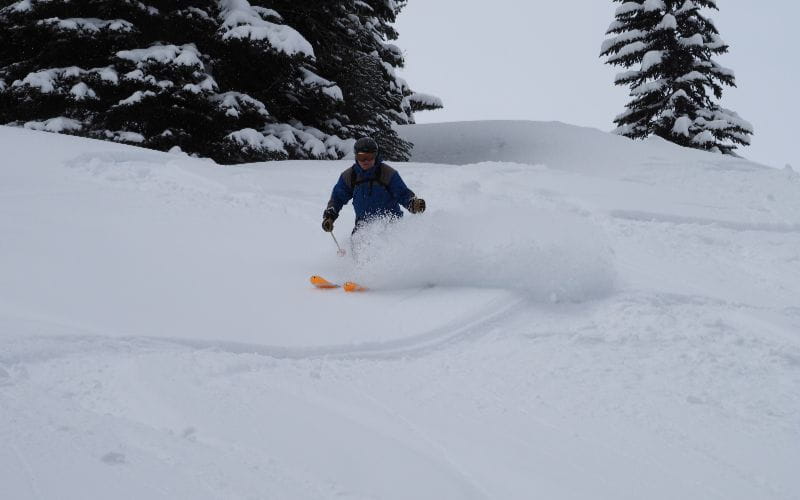
If you ski or helicopter ski regularly, we do not need to tell you that skiing is a physically demanding sport. It’s not just exhausting from a cardiovascular point, it also takes significant core stability and muscular strength in the shoulders and legs.
On top of that, the constant cold and wind can quickly wear away at your endurance. Backcountry skiing, as you’ll encounter during helicopter skiing, is even more taxing due to the presence of ungroomed terrain and challenging obstacles. If you’re not fit enough for the task, you’ll fatigue quickly. Not only is this very unpleasant, but it’s also dangerous.
A tired skier is more likely to make mistakes and have an accident, injure themselves or suffer the ill effects of a hostile climate. That’s why it’s so important to get ski fit before setting off on your heli ski experience. The best way to do so is to spend some time on the more traditional groomed trails, where you can work yourself up to the challenge and build strength.
Otherwise, there’s also a video-guided ski fitness programme that you can find on the Pure Powder website. We recommend you use these two methods in tandem. Remember, this advice applies even to experienced skiers, considering the long months between ski seasons that give plenty of time for the very specific ski fitness to fade.
Acclimate to Helicopter Skiing Canada
Most helicopter skiing Canada happens at very high altitudes in the mountains of British Columbia. This is where temperatures reach their coldest, where snow falls frequently and far longer than it does at lower altitudes. Moreover, the incredible cold produces a kind of low-density, high air content snow that we call ‘powder’ or ‘champagne’ snow for its lightness. It’s a pleasure to ski over, making it highly sought after in pristine stretches. However, one decidedly unpleasant aspect of these altitudes is the thinness of the air found here.
Carrying far less oxygen, anyone breathing in this air for an extended period of time will find themselves not only more short of breath and fatigued than usual, but they also risk altitude sickness. This condition causes exhaustion, dizziness and nausea and can be life-threatening, often because of the hostile environments in which it happens.
Anyone suffering altitude sickness must be transported to a lower altitude as soon as possible, where they can replenish their oxygen. It can be prevented by acclimating beforehand, giving your body a chance to adjust to lowered oxygen levels. As a skier, this can be done by spending time at a similar (but lower) altitude for a day or two, ideally practising groomed-tail skiing in these conditions.
Helicopter Skiing Canada: Gear Up
Helicopter skiing is something that takes specialised and high-quality gear. You’re going to need not only skis, but also a full set of snow-ready clothing, including but not limited to a waterproof outer layer, goggles, boots and gloves. The name of the game during helicopter skiing is really layering.
You’re going to need enough to keep off the cold, the wet and the wind, but you also want to be able to remove layers without sacrificing protection once activity heats you. Any equipment you purchase for your helicopter skiing trip should ideally be of the top quality, as its value will be greatly appreciated when protecting you against the bitter climate of the Canadian mountains.
Pure Powder has partnered with Surefoot and Ellis Brigham to help provide our clients with premium ski equipment that will serve them excellently out on the snow. There are other kinds of equipment, however, that your guides will provide you. These are generally items meant to keep you safe in the unlikely case of an avalanche, including a probe, shovel and avalanche beacon. These could be lifesaving and should be kept on you at all times during the helicopter skiing trip.
Helicopter Skiing Canada: Specialised Insurance
For all that we and your guides are going to do to keep you safe, it doesn’t hurt to have some insurance. After all, even a minor injury could necessitate a helicopter rescue due to the challenges of the remote mountainous terrain.
Should this occur, you would doubtlessly hate to add to the unpleasantness of an accident with the bill for a helicopter rescue. We can assure you that these tend to be eye-wateringly high. So instead, secure yourself an insurance package that covers not only injury during your ski trip, but also any equipment loss or damage.
Keep in mind that your average travel insurance won’t cover what happens during an extreme sport. You’re going to need a specialised package made for activities like these. Pure Powder is legally not allowed to recommend any particular insurer. You can, however, find a list of providers that we’ve linked on our ‘Ski Insurance’ tab, for purely educational purposes.
Conclusion
In conclusion, helicopter skiing is an extreme sport not without significant risk, including injuries, hypothermia, altitude sickness, avalanches and more. This will be as best as possible mitigated by Pure Powder’s selectiveness and the vigilance of your guides, but we ask that you contribute to the effort in a number of ways.
Evaluate yourself and select ski trips within your skill level. Take time to build up the relevant fitness and acclimate to the air conditions. Always remember to listen to your guides and take their advice seriously. Finally, don’t depart without having secured the right gear and specialised ski insurance. Get in touch today to learn more or book your next skiing trip.